


Picture a finance team girdled by endless spread-sheets, juggling reconciliations, cross-checking entries, and spending late nights ensuring every figure aligns. It’s a familiar scene for numerous account professionals precise yet sorrowfully repetitious. But what if your books could suppose for you? What if rather of simply recording figures, they could identify trends, flag anomalies, and guide smarter business opinions? Thanks to Artificial Intelligence (AI), this vision is now a reality. AI in accounting and finance is transubstantiating account from a primer, record- keeping function into an intelligent, sapience driven discipline. By decrypting complex checks and delivering real- time fiscal visibility, AI helps businesses move from response to foresight. This composition explores how AI is reshaping ultramodern finance automating tedious tasks, perfecting delicacy, and empowering finance brigades to concentrate on strategy and growth rather of data entry.
The Problem Complexity of Traditional Checks
Traditional account systems calculate heavily on homemade trouble from entering deals to coordinating books and generating reports. These processes are not only time consuming but also prone to mortal error. A single lost number or missed entry can distort fiscal statements, leading to expensive disagreement also, homemade checks warrant real time visibility. Accountants frequently deal with out-dated data, which detainments fiscal perceptivity and decision- timber. Data silos across departments further complicate matters, forcing teams to depend on slow collaboration and home-made cross-verification. As a result, utmost traditional accounting focuses on “what happened” a retrospective approach that struggles to keep pace with dynamic business surroundings. This reactive system limits dexterity, making it delicate for businesses to anticipate issues or identify arising openings. AI changes this reactive process into a visionary, insight driven system, turning fiscal operation into a source of strategy rather than stress.
The AI Revolution in Finance from Data Entry to Decision- Making
Artificial Intelligence is revolutionizing the finance function by automating repetitious, low- value tasks and empowering professionals to concentrate on analysis and strategic growth. AI in accounting and finance tools handle processes like conciliation, sale categorization, and fiscal reporting with unmatched speed and delicacy. Through technologies similar as machine literacy, systems learn from literal data to identify patterns and predict anomalies. Natural language processing (NLP) enables systems to read checks or contracts, excerpt crucial details, and update checks automatically. Meanwhile, predictive analytics helps read trends similar as cash inflow oscillations or implicit budget faults. Far from replacing accountants, AI enhances their places shifting their focus from homemade secretary to interpretation and decision timber. For instance, AI can dissect thousands of deals in seconds, flag suspicious exertion, and highlight liquidity trends incontinently, enabling associations to make smarter, data- backed fiscal opinions briskly than ever ahead.
Intelligent Accounting Systems How They Work
Intelligent accounting systems are AI powered platforms designed to automate, dissect, and optimize every aspect of fiscal operation. Unlike traditional software, these systems integrate seamlessly with being fiscal tools similar as ERPs, payroll systems, CRMs, and banking operations to produce a unified fiscal ecosystem. By pulling data from different sources like checks, bank feeds, and expenditure reports, they offer a single, accurate, and real- time view of a company’s fiscal health.
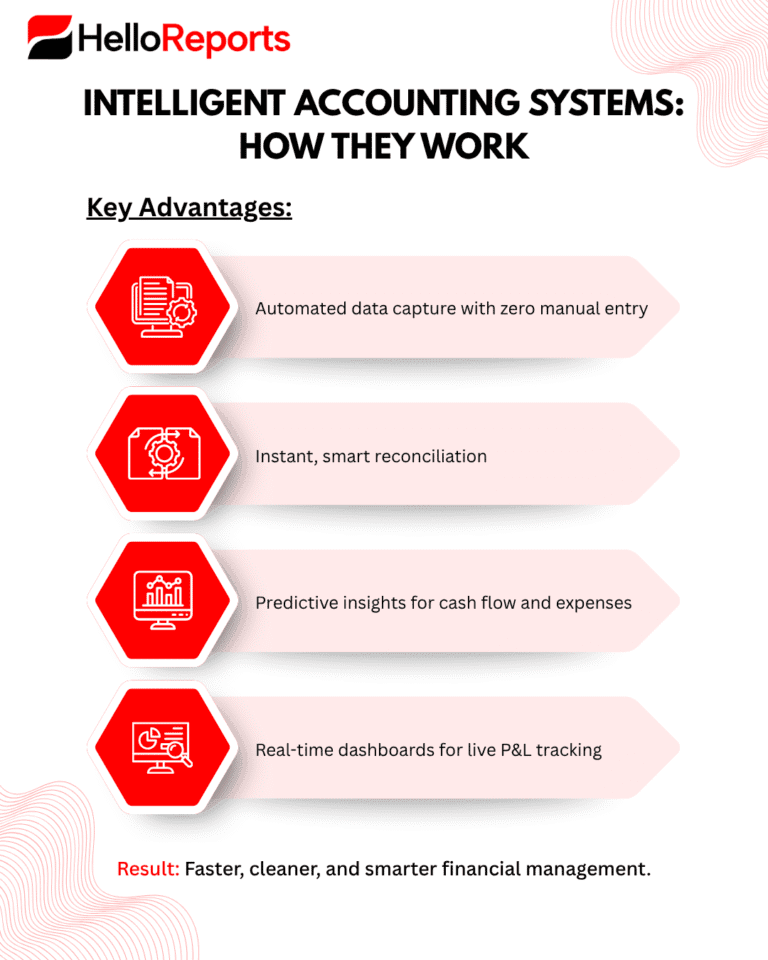
Crucial features make these systems transformative. Automated data prisoner eliminates the need for homemade entry, drastically reducing mortal error. Smart conciliation detects disagreement incontinently, icing every figure aligns rightly. Predictive perceptivity help anticipate forthcoming charges, identify implicit late payments, and suggest optimal cash inflow strategies. Also, real- time dashboards and visual reports allow finance teams to cover profit and loss statements dynamically. Rather of staying for month- end reports, finance teams can access live P&L perceptivity anytime, enabling briskly and more informed decision- timber. In substance, intelligent account systems turn raw fiscal data into an organized, tone- streamlining knowledge base that evolves with your business.
AI for Business Finance operation Turning Data into Action
Artificial Intelligence for business finance management transforms stationary fiscal data into practicable business intelligence. By analyzing patterns within checks, AI systems help read cash inflow, optimize charges, and strengthen fraud discovery and compliance. Through predictive analytics, these tools anticipate implicit fiscal issues similar as guests likely to delay payments or departments overrunning budgets and alert brigades before problems escalate.
For illustration, AI models can dissect seller payment histories to prognosticate which suppliers might beget unborn detainments or highlight cost orders that constantly exceed limits. This visionary approach ensures better budget planning and resource allocation. With real- time data processing, fiscal leaders can make faster opinions, reduce threat exposure, and enhance overall effectiveness. AI driven perceptivity also improve compliance by flagging unusual deals and icing adherence to account norms automatically.
Eventually, AI doesn’t just process data it translates fiscal signals into strategic guidance. Finance brigades can now shift from reactive secretary to active participation in shaping business direction. By using AI backed perceptivity, they give leadership with clear, data- supported recommendations that drive profitability, growth, and long- term adaptability.
The Mortal AI Collaboration
The true power of AI in accounting and finance account emerges when technology and mortal moxie work hand in hand. While AI handles the complex calculation data entry, conciliation, and analysis humans handle the meaning. Accountants bring critical thinking, ethical judgment, and contextual understanding that machines warrant. Together, they form a co-operation where AI accelerates delicacy and effectiveness, and professionals insure that perceptivity are applicable and strategically sound.
This collaboration requires trust and translucency in AI systems. Accountants must understand how algorithms reach conclusions and validate those results through professional logic. Non-stop training and adaption are essential, helping finance professionals stay confident in interpreting AI generated perceptivity. Rather than replacing mortal places, AI amplifies them freeing accountants from repetitious work and allowing them to concentrate on premonitory functions that truly shape business issues.
Real- World Impact Case scripts or exemplifications
Consider a mid-sized retail chain that espoused an AI powered account platform to streamline its month end ending process. By automating reconciliations and invoice matching, the company reduced its ending time by 50%, freeing finance staff to concentrate on other analysis and strategy. Errors due to homemade entries dropped significantly, and real- time dashboards allowed leadership to track profitability trends incontinently.
In another case, a small manufacturing enterprise integrated AI grounded fiscal analytics to review supplier payments. Within weeks, the system linked recreating overcharges and inefficiencies in expenditure blessings, helping the business recover nearly Rs.5 lakhs in gratuitous costs. These exemplifications punctuate palpable results briskly reporting cycles, bettered data delicacy, and better fiscal control.
AI is no longer just a futuristic conception it’s a practical tool driving measurable effectiveness across diligence. Organizations using intelligent accounting systems gain a clear edge in delicacy, time operation, and strategic dexterity.
The Future of AI in Accounting and Finance
The coming surge of fiscal invention is formerly unfolding. Predictive finance, independent secretary, and AI- powered virtual sidekicks will soon review how businesses handle counting. Real time, tone learning systems won’t just record deals but also read trends, detect anomalies, and give contextual fiscal advice. As cloud based AI tools come more accessible, indeed small and medium enterprises (SMEs) can harness enterprise position fiscal perceptivity without massive investments. The future of account is one where every tally entry contributes incontinently to smarter decision- timber. For growing businesses, espousing AI isn’t just an upgrade it’s a strategic necessity for staying competitive.
Conclusion
AI has converted account from a task of data entry into a discipline of decision timber. Intelligent systems now bring clarity, speed, and foresight to fiscal operation, enabling businesses to act, not just reply. By combining automation with mortal intelligence, associations can achieve a perfect balance of delicacy and strategy. In today’s fast paced and unpredictable business world, finance doesn’t just need to keep records it needs to keep up. With AI, your checks don’t just tell you what happed; they tell you what’s coming.
Questions and answers (FAQ)
AI automates repetitious tally tasks like conciliation, sale matching, and categorization. It reads and processes data in real time, reducing homemade crimes and helping finance teams identify trends incontinently.
No. AI enhances, not replaces, accountants. It handles data-heavy, repetitious work, freeing accountants to concentrate on interpretation, strategy, and fiscal planning.
Machine Learning for pattern recognition, Natural Language Processing (NLP) for reading unshaped data, and Predictive Analytics for forecasting trends are the most poignant in ultramodern account.
By turning stationary data into real- time perceptivity, AI provides accurate forecasts, detects anomalies beforehand, and gives operation a clear picture of fiscal performance to guide smarter, briskly opinions.
Absolutely. numerous intelligent accounting systems, like HelloPay and analogous platforms, are erected with SMEs in mind offering affordable, stoner-friendly AI tools that automate secretary and reporting without demanding deep specialized moxie.